EQT Q1 2026 Brief: Appalachian Gas, Curtailments, and PA/WV State-Source Signals
EQT operator intelligence brief covering Appalachian gas scale, PA/WV source clocks, permit freshness, and curtailment context.
By Johnathan · Reviewed by EnergyNetWatch Research · Historical report
Historical report
This page is a historical source-record snapshot tied to a specific company update or activity event. It links back into durable operator and state workflows.
Key Takeaways
- EQT reported 618 Bcfe of Q1 2026 sales volume, up 8% year over year, and $1.832 billion of free cash flow attributable to EQT.
- The public-record value is source freshness: PA and WV records do not publish on the same clock.
- The requestable artifact is an EQT Appalachian table by source month, state, gas production, permit context, and freshness caveat.
EnergyNetWatch reviewed EQT-linked Pennsylvania and West Virginia source records on May 9, 2026.
Operator Signal
| Field | Current signal |
|---|---|
| Signal grade | Active watchlist |
| Primary source-record use case | Appalachian gas source freshness across PA and WV |
| Company-reported Q1 sales volume | 618 Bcfe |
| Company-reported realized price | $5.08/Mcfe |
| PA source clock | Production through February 2026 |
| WV source clock | H6A workbook through December 2025 |
| Permit freshness | PA through March 19, 2026; WV through March 25, 2026 |
| First follow-up | EQT PA/WV source-freshness table by alias and county |
EQT's company report says sales volumes and cash flow improved. The EnergyNetWatch signal is the source clock: Pennsylvania and West Virginia do not update on the same cadence.
At A Glance
| Field | Current signal |
|---|---|
| Q1 sales volume | 618 Bcfe |
| Prior-year comparison | 571 Bcfe |
| Average realized price | $5.08/Mcfe |
| Free cash flow attributable to EQT | $1.832B |
| Q2 sales-volume guide | 570 to 620 Bcfe |
| Q2 strategic curtailments | 10 to 15 Bcfe |
| PA latest matched production month | February 2026 |
| WV latest matched production month | December 2025 |
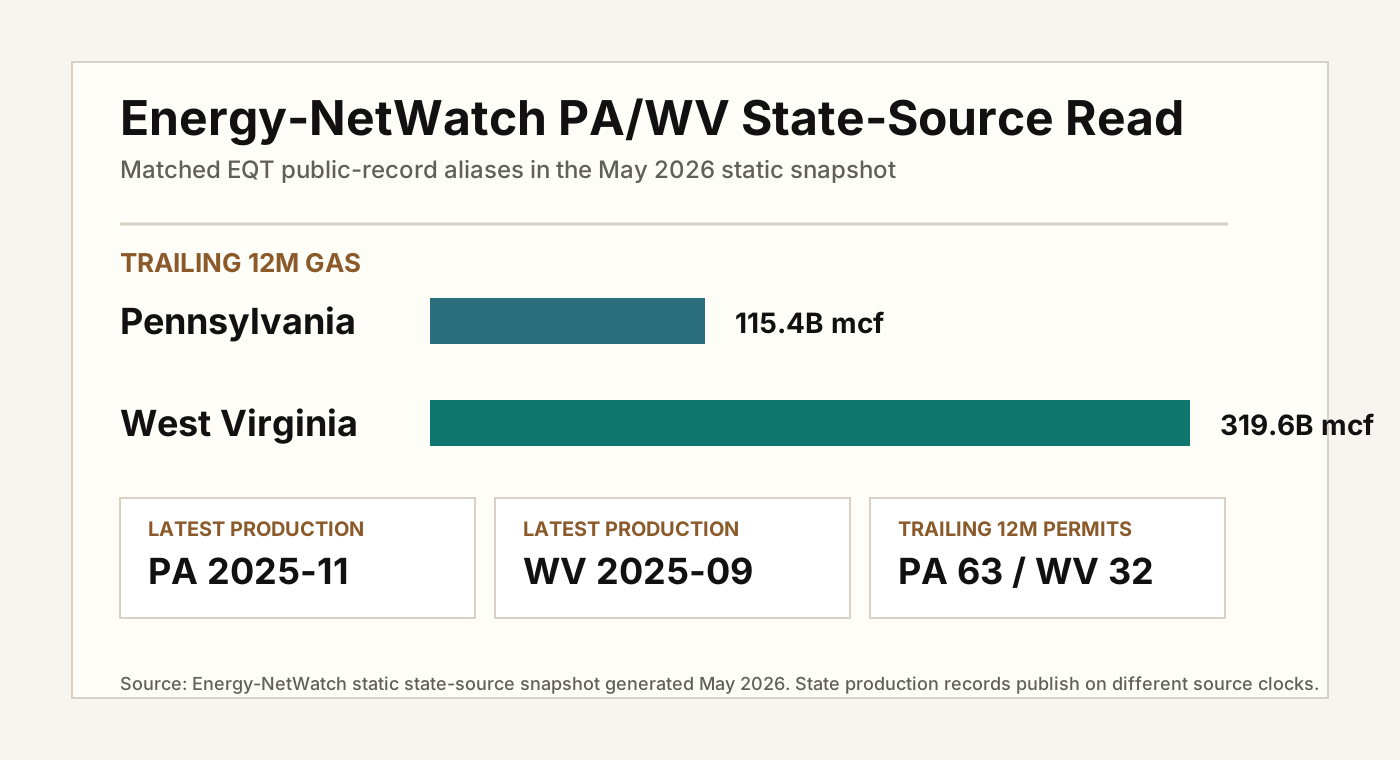
EnergyNetWatch Pennsylvania and West Virginia EQT source-freshness view. Public articles use rounded static snapshots; authenticated workflows support current records, maps, exports, alerts, and saved work.
What Changed Recently
| Signal | Current signal |
|---|---|
| Company update | EQT reported higher sales volume, stronger pricing, and higher free cash flow. |
| PA source signal | Pennsylvania matched production records are loaded through February 2026. |
| WV source signal | West Virginia H6A monthly fields are loaded through December 2025 in the 2025 Q4 workbook. |
| Permit signal | Matched EQT permits are current into March 2026 in both PA and WV. |
| Alias signal | EQT ARO, EQT CHAP, EQT PROD CO, and EQT PRODUCTION COMPANY should stay visible. |
The main signal is source timing. A good Appalachian gas brief makes the production and permit clocks clear.
Source-Record Snapshot
| Field | Current signal |
|---|---|
| Pennsylvania latest matched gas | 116.8 Bcf |
| Pennsylvania wells with production | 2,000 |
| Pennsylvania 2026 matched permits | 27 |
| Pennsylvania latest matched permit | March 19, 2026 |
| West Virginia latest matched gas | 58.5 Bcf |
| West Virginia wells with production | 1,138 |
| West Virginia 2026 matched permits | 24 |
| West Virginia latest matched permit | March 25, 2026 |
West Virginia's latest H6A workbook also shows 735.7 Bcf of matched full-year 2025 gas and 2.0M bbl of matched full-year 2025 oil.
County Follow-Up
| Field | Current signal |
|---|---|
| Pennsylvania gas counties | Greene, Washington, Lycoming, Westmoreland, Allegheny, Fayette |
| West Virginia gas counties | Wetzel, Marshall, Marion, Doddridge, Ritchie, Tyler |
| PA permit counties to watch | Greene and Washington |
| WV permit county to watch | Wetzel |
| Identity caveat | Acquired and alias records should stay visible until reviewed |
Infrastructure And Midstream Signals
| Layer | Public page treatment | App follow-up |
|---|---|---|
| Gas gathering and facility context | Not expanded in this public EQT snapshot. | Review operator-linked facility, gathering, and midstream rows only where source records support the connection. |
| Why limited here | The public page focuses on source freshness across Pennsylvania and West Virginia. It is not a free infrastructure lead table. | Request the current EQT PA/WV source-freshness package with counties, source dates, maps, exports, alerts, and API fields. |
What To Watch Next
| Watch item | Current signal |
|---|---|
| PA monthly files | Do February 2026 rows move forward on the next source refresh? |
| WV H6A workbook | Does the next workbook change the December 2025 source view? |
| Permit movement | Do March 2026 permit records translate into later activity? |
| Curtailment period | Company Q2 curtailments may affect production timing, but source records lag. |
| Alias handling | Keep EQT-linked source names visible in exports and map workflows. |
What To Request
The requestable table is:
Request the current EQT Pennsylvania/West Virginia source-freshness table.
The export should include operator alias, state, county, production month, gas, oil, wells, permit issue date, source date, maps, alerts, and API delivery options.
Frequently Asked Questions
What were EQT's Q1 2026 highlights?
EQT reported 618 Bcfe of Q1 2026 sales volume and $1.832B of free cash flow attributable to EQT.
Why did EQT guide to lower Q2 2026 volumes?
Q2 guidance included 10 to 15 Bcfe of planned strategic curtailments.
Why are Pennsylvania and West Virginia production months different?
State sources publish on different calendars. Pennsylvania is more frequent in this snapshot, while West Virginia uses the H6A workbook cadence.
Is the EnergyNetWatch snapshot the same as EQT's reported production?
No. EQT's reported production is a company-level measure. EnergyNetWatch signals state-source records by operator alias, state, county, source month, permit, and well.
Sources
- EQT Q1 2026 results
- EnergyNetWatch EQT PA/WV source-freshness snapshot, reviewed May 9, 2026
Data notes
EnergyNetWatch EQT figures are rounded public state-source snapshots reviewed on May 9, 2026. They are used for Pennsylvania and West Virginia production-month, permit, operator, and source-freshness review.
Recommended next pages
How to Track Drilling Permits by Operator Before Production Shows Up (2026)
Learn how to track drilling permits by operator, connect permits to later production signals, and avoid common state-source mistakes.
Why Oil and Gas Data Is Hard to Normalize Across States (2026)
See why oil and gas data normalization is difficult across states, source schemas, identifiers, reporting cadence, permits, and production.
Public vs Paid Oil and Gas Data: When State Portals Are Enough (2026)
Compare public vs paid oil and gas data, including state portals, normalized workflows, app access, exports, maps, and public samples.
How to Access Free Oil & Gas Production Data Across 26 States (2026 Guide)
Learn where free oil and gas production data comes from, why state records are fragmented, and how EnergyNetWatch tracks 26 states.
Related EnergyNetWatch pages
Want the current table behind this analysis?
Public articles use selected examples. Request access if your team needs current source refreshes, exact identifiers, maps, exports, alerts, saved workflows, or API access for this market.