ExxonMobil Q1 2026 Brief: Permian, Pioneer, XTO, and State-Source Signals
ExxonMobil Q1 2026 earnings showed lower reported profit, higher production, Permian and Guyana growth, Golden Pass LNG progress, and clear Pioneer/XTO state-source signals.
By Johnathan · Reviewed by EnergyNetWatch Research · Last updated 2026-05-10
Key Takeaways
- ExxonMobil reported $4.2B of Q1 2026 earnings and $4.9B of earnings excluding identified items.
- Worldwide production was 4.594 MMBOE/d, with Permian and Guyana growth offsetting disruption and downtime elsewhere.
- Energy-NetWatch shows the strongest Exxon-family public-record signals through Pioneer in Texas and XTO in New Mexico and Texas.
ExxonMobil's first-quarter 2026 update had a clear split. Reported earnings were down year over year. Production was up. The stated operating focus was Guyana, Permian growth, Golden Pass LNG, refinery throughput, and continued portfolio execution.
For Energy-NetWatch, the useful follow-up is the U.S. onshore layer. ExxonMobil's parent-company reporting combines global businesses, offshore/international production, downstream, chemicals, timing effects, acquisitions, and affiliate structures. State-source records are narrower, but they are useful for tracking the public-record footprint behind the U.S. onshore story: Pioneer Natural Resources, XTO Energy, Denbury, and legacy Exxon/Mobil state-source names.
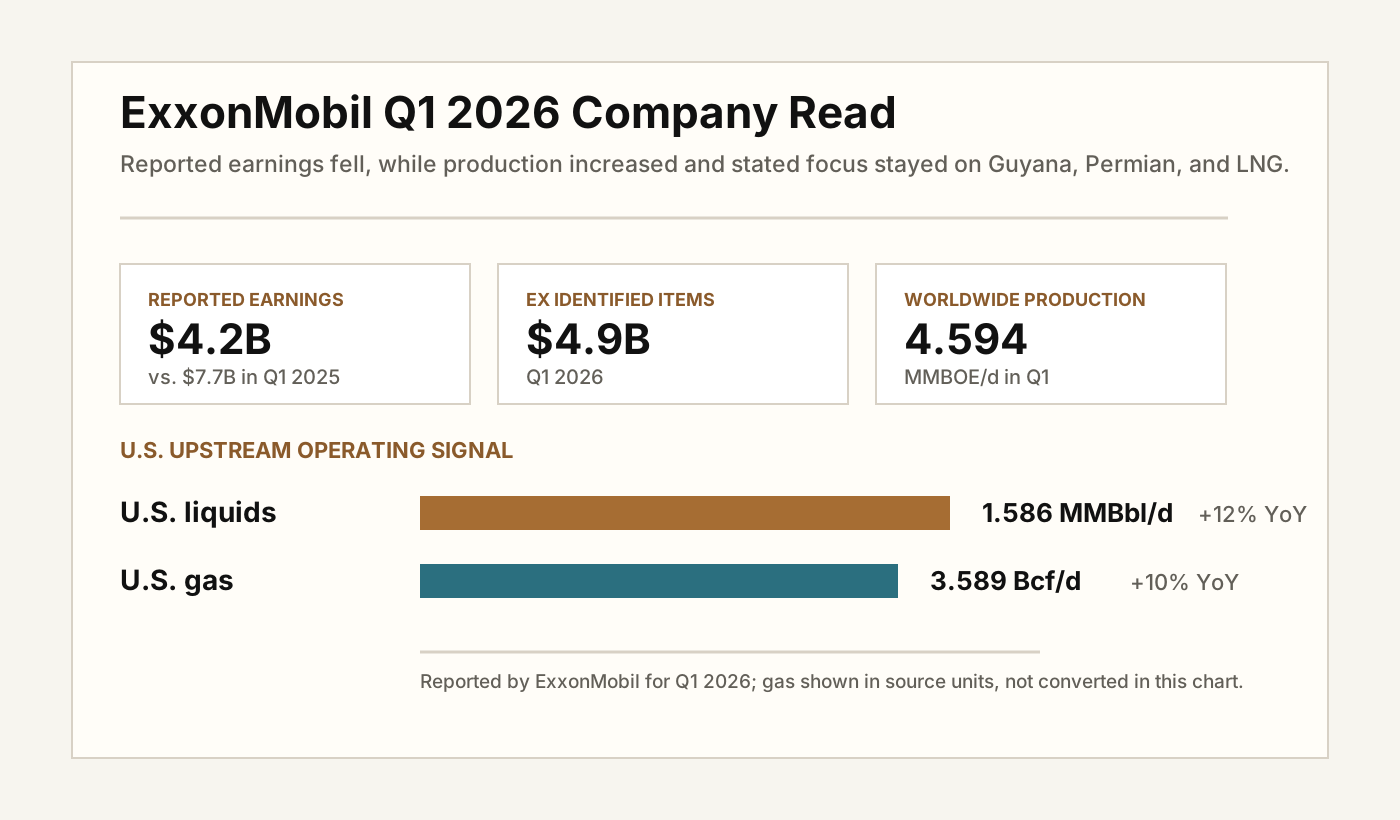
Here are the company-reported numbers. ExxonMobil reported $4.2 billion of Q1 2026 earnings, down from $7.7 billion a year earlier. Earnings excluding identified items were $4.9 billion. Upstream earnings were $5.7 billion, down from $6.8 billion. Worldwide oil-equivalent production was 4.594 MMBOE/d, up 43 MBOE/d year over year, with the company citing Permian and Guyana growth as key drivers.
| ExxonMobil reported | Q1 2026 | Q1 2025 | Change |
|---|---|---|---|
| Earnings | $4.2B | $7.7B | -46% |
| Earnings excluding identified items | $4.9B | $7.7B | -37% |
| Upstream earnings | $5.7B | $6.8B | -15% |
| Worldwide production | 4.594 MMBOE/d | 4.551 MMBOE/d | +43 MBOE/d |
| U.S. liquids production | 1.586 MMBbl/d | 1.418 MMBbl/d | +12% |
| U.S. gas production | 3.589 Bcf/d | 3.266 Bcf/d | +10% |
ExxonMobil Q1 2026 Earnings and Production Read
The quarter had two different messages. Reported net income was lower because timing effects, depreciation, and disruption-related impacts weighed on the headline number. The production line moved the other way. ExxonMobil's U.S. liquids and U.S. gas volumes both increased year over year, and worldwide production was slightly higher despite international disruption and downtime.
Here is what changed operationally. Guyana remained the high-margin international growth driver, with ExxonMobil reporting record production there. The Permian stayed central to the U.S. growth story, with management saying the company remains on track for 1.8 MMBOE/d of full-year 2026 Permian production. Golden Pass LNG reached first LNG from Train 1, adding a U.S. Gulf Coast export milestone outside the upstream-only read. The company also called out stronger refinery throughput after deferred maintenance returned capacity to service.
That makes ExxonMobil different from a pure Lower 48 producer. A useful public-record view should not try to reconcile all of ExxonMobil's reported production to state records. The better read is to use state sources to monitor the U.S. onshore operating pieces that are visible in public data.
State-Source Signals
The Energy-NetWatch snapshot for this brief uses matched Exxon-family state-source labels, including Pioneer Natural Resources, XTO Energy, XTO Permian Operating, Denbury Onshore, Exxon Mobil Corporation, and legacy Mobil/Exxon labels where they appear in state records.
That alias set changes the Exxon read materially. A simple parent-company lookup undercounts the U.S. onshore footprint. The larger state-source signal is visible through acquired and affiliated operating names, especially Pioneer in Texas and XTO in New Mexico and Texas.
| Energy-NetWatch state-source view | Current public-record signal |
|---|---|
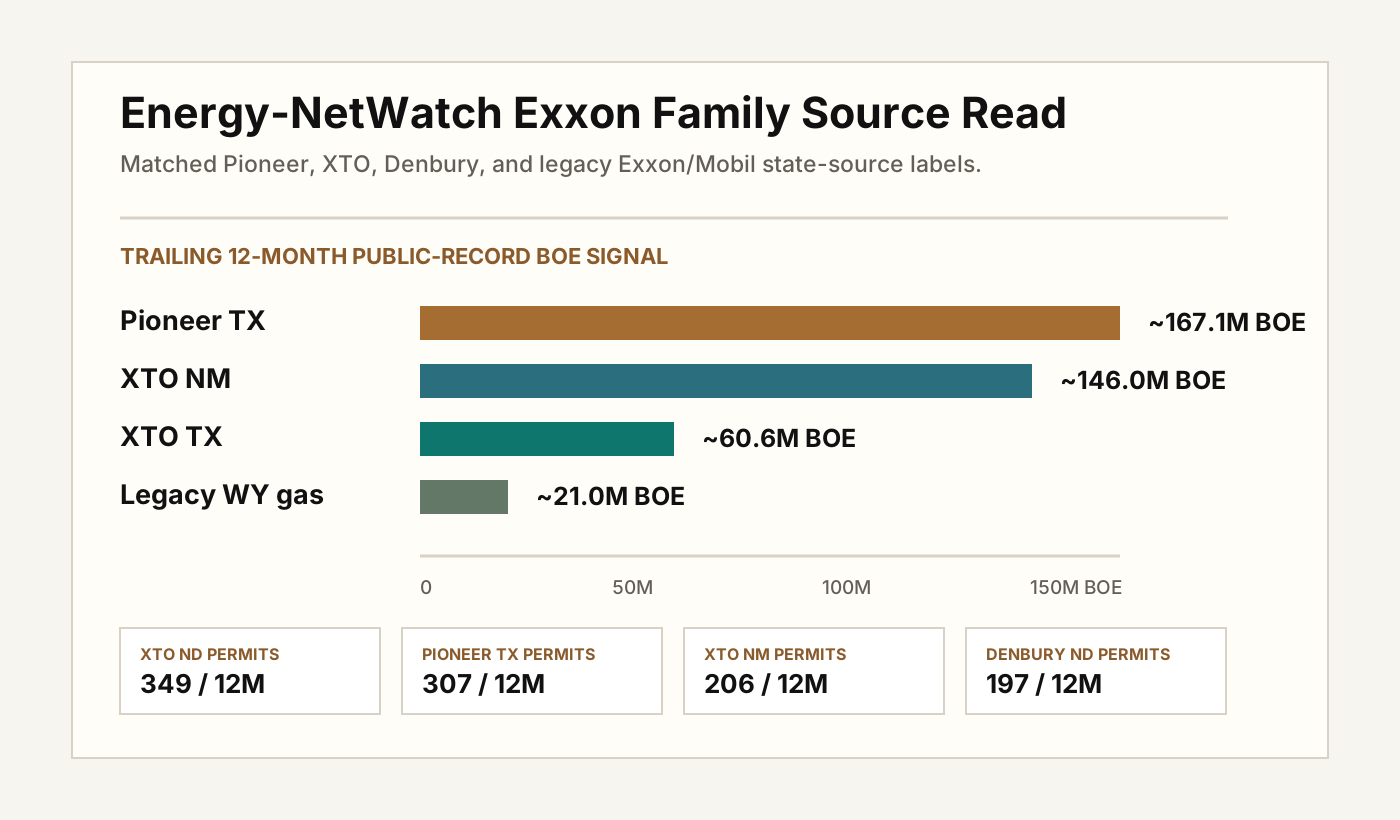
| Pioneer Natural Resources, Texas | Roughly 167.1M BOE over the trailing 12 months, with 13,321 matched wells and 307 permits over the trailing 12 months. |
| XTO Energy, New Mexico | Roughly 146.0M BOE over the trailing 12 months, with 3,389 matched wells and 206 permits over the trailing 12 months. |
| XTO Energy, Texas | Roughly 60.6M BOE over the trailing 12 months, with 3,947 matched wells and 47 permits over the trailing 12 months. |
| Exxon/Mobil legacy, Wyoming | Roughly 21.0M BOE over the trailing 12 months, driven by gas-weighted records. |
| XTO Energy, North Dakota | A smaller production signal in the loaded snapshot, but the strongest permit count in this alias group at 349 permits over the trailing 12 months. |
| Denbury Onshore | Visible in Texas, North Dakota, Louisiana, and Wyoming records; useful as an acquired-asset identity layer rather than a Permian scale driver. |
The Permian read-through is the center of the public-record story. Texas shows the largest Pioneer-linked production base in this snapshot, while New Mexico shows a large XTO-linked production base. That mirrors the company-level message without pretending the public record is the same thing as ExxonMobil's consolidated reporting.
Permit activity adds a forward-looking layer. XTO-linked North Dakota permits were the largest trailing-12-month permit count in this matched set, followed by Pioneer-linked Texas permits and XTO-linked New Mexico permits. For public users, that means the follow-up workflow is not only Texas/New Mexico Permian production. It also includes checking whether North Dakota and Denbury-related records are relevant to a specific asset, acquisition, or activity question.
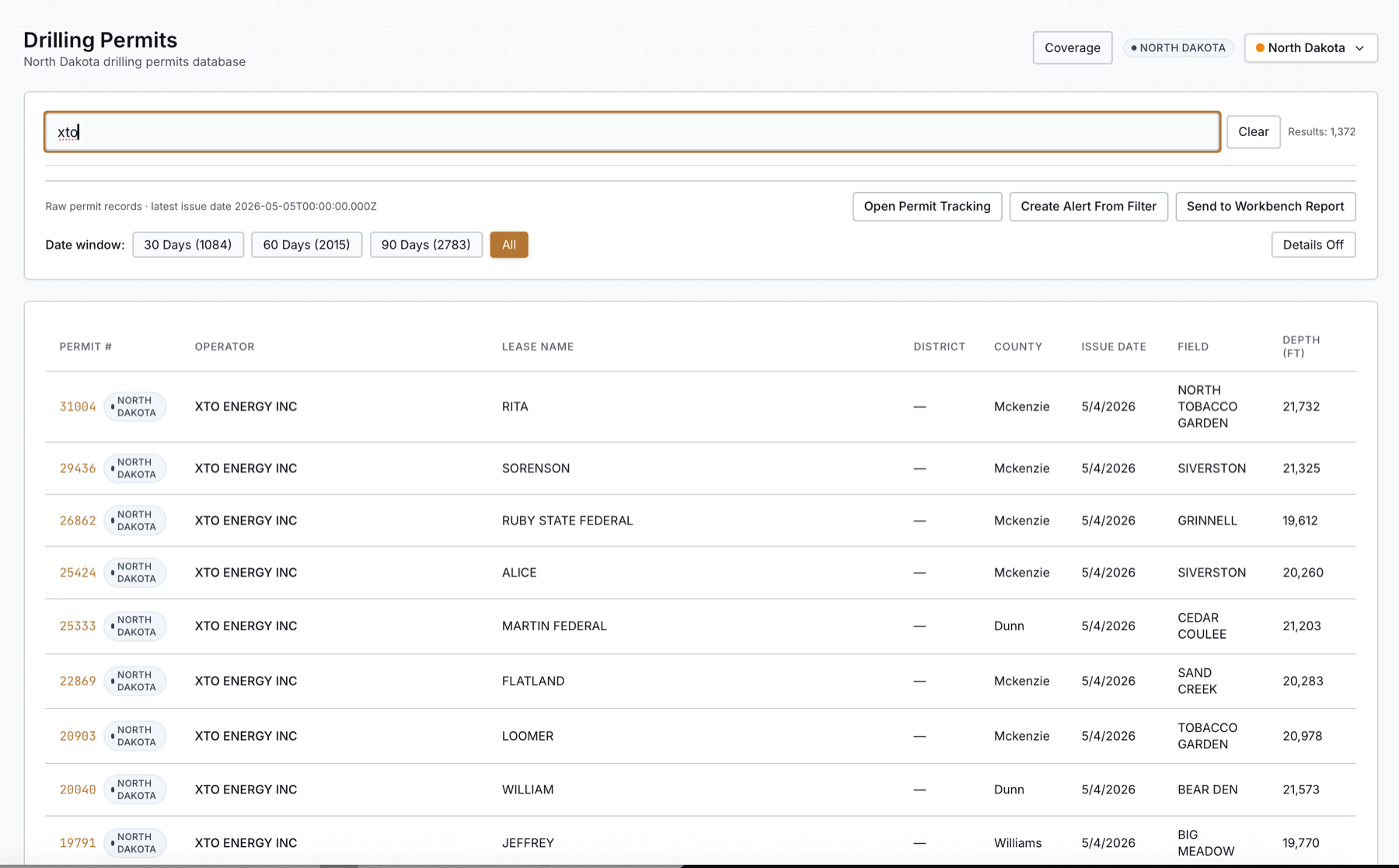
Energy-NetWatch app view for XTO Energy permit follow-up in North Dakota. Public articles use static screenshots and rounded summary figures; the authenticated app is built for current filters, permit rows, counties, fields, alerts, and Workbench handoff.
Why Alias Discipline Matters
ExxonMobil is a good example of why public operator data needs parent-company context. The state record may not say "ExxonMobil" even when the operating asset is economically relevant to ExxonMobil's current portfolio. It may say XTO, Pioneer, Denbury, Mobil, or another legacy label.
That is not a defect in the public record. It is how state-source data behaves after acquisitions, legacy filings, and state-specific operator registration. The analytical risk is treating one label as the whole company.
For this reason, the Energy-NetWatch read is intentionally framed as an Exxon-family state-source snapshot, not a consolidated ExxonMobil production reconciliation. The company-reported figure tells investors how the global enterprise performed. State-source records help analysts track the onshore operating footprint by state, county, permit activity, well inventory, source freshness, and operator alias.
Analyst Takeaway
ExxonMobil's Q1 update was not just a lower-earnings quarter. Reported earnings were lower, but U.S. liquids and gas volumes increased, Guyana set a record, Golden Pass reached first LNG, and the Permian remained on track for a larger full-year production base.
The Energy-NetWatch read-through is concentrated in operator identity and onshore source visibility. Pioneer in Texas and XTO in New Mexico and Texas are the clearest production signals. XTO in North Dakota and Denbury in North Dakota/Texas add permit and acquisition-context signals. Legacy Exxon/Mobil records remain useful in states such as Wyoming, but they are not enough by themselves to describe the current U.S. onshore footprint.
For teams watching ExxonMobil after earnings, the practical workflow is straightforward: track Permian production across Texas and New Mexico, keep Pioneer and XTO aliases tied to the parent-company view, monitor permit activity in Texas, New Mexico, and North Dakota, and separate state-source timing from company-reported quarterly metrics.
For current records, well histories, maps, exports, alerts, and API access, the public brief is the starting point. Request Energy-NetWatch access to review current operator and state-source data.
Frequently Asked Questions
What were ExxonMobil's Q1 2026 earnings highlights?
ExxonMobil reported $4.2 billion of Q1 2026 earnings, or $1.00 per diluted share. Earnings excluding identified items were $4.9 billion. Worldwide production was 4.594 MMBOE/d.
Why does this brief include Pioneer, XTO, and Denbury?
Because state-source records often use operating-company, acquired-company, or legacy-company names instead of the parent-company name. Pioneer, XTO, and Denbury are relevant state-source labels for an Exxon-family public-record view.
Where does Energy-NetWatch show the strongest Exxon-family state-source signal?
The strongest loaded public-record signals in this snapshot are Pioneer Natural Resources in Texas, XTO Energy in New Mexico, and XTO Energy in Texas. Those labels carry the clearest onshore production read-through for the Permian side of the ExxonMobil story.
Is the Energy-NetWatch snapshot the same as ExxonMobil's reported production?
No. ExxonMobil's reported production is a consolidated company metric that includes global upstream operations and company-reporting rules. Energy-NetWatch state-source snapshots are normalized public records from covered state sources. They are used for operator identity, state, county, permit, well-level, production-month, and source-freshness follow-up.
Sources
- ExxonMobil first-quarter 2026 results, Form 8-K
- ExxonMobil first-quarter 2026 Form 10-Q
- ExxonMobil Q1 2026 earnings call transcript
- Reuters earnings coverage via Investing.com
- Energy-NetWatch static state-source snapshot, generated May 10, 2026
Data notes
Energy-NetWatch Exxon-family figures are matched public state-source snapshots generated May 10, 2026. They include Pioneer, XTO, Denbury, and legacy Exxon/Mobil labels and are used for source-level monitoring, not a consolidated ExxonMobil production reconciliation.
Recommended next reads
Chevron Q1 2026 Brief: Hess, Bakken, Permian, and State-Record Production Signals
Chevron beat adjusted earnings expectations in Q1 2026, while Hess, Bakken, Gulf of America, and Permian activity drove the production story.
Texas Oil and Gas Production Data: RRC Records and Public Samples (2026)
Understand Texas oil and gas production data, RRC reporting limits, public sample trends, and when normalized app workflows help.
New Mexico Oil and Gas Production Data: OCD Sources and Public Samples (2026)
Learn how New Mexico oil and gas production data works, where OCD sources fit, and how public EnergyNetWatch samples show Permian context.
Why Oil and Gas Data Is Hard to Normalize Across States (2026)
See why oil and gas data normalization is difficult across states, source schemas, identifiers, reporting cadence, permits, and production.
Related EnergyNetWatch pages
Need current records behind this analysis?
Request access for current source refreshes, unmasked well histories, maps, exports, alerts, DCA, economics, and operator workflows.
Request current data access